










12 October 2026
Gunfire and your hearing
Exposure to loud noise such as gunfire has real consequences for your hearing. – BY YOLANDÉ VAN DER WESTHUIZEN
Have you ever experienced a blocked ear with that infamous ‘tweeeeeeeeeeet’ sound in your ear right after a gunshot? The blocked ear opens up a few days later and you feel a sense of relief that you ‘dodged a bullet’ there but the problem is, that the damage has already been done.
We all know that the loudness of a gunshot can cause permanent hearing damage, but do we really understand the extent of this damage?
The innermost part of the ear contains the hearing organ, the cochlea. This hearing organ is a complex structure and amongst other structures, contains hair cells. The human ear contains around 3 500 inner hair cells and 12 000 outer hair cells in this hearing organ which is around the size of a pea.
When these hair cells get damaged by loud sounds, impulses cannot be conveyed to the brain. This hair cell damage is permanent and cannot be reversed.
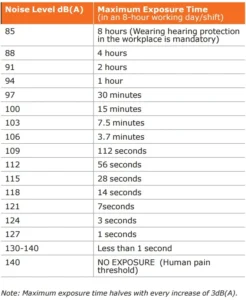
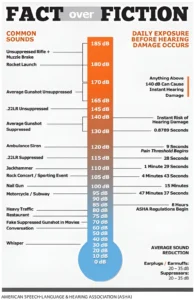
According to the American Speech-Language & Hearing Association (ASHA), hearing damage can happen at 85dB loudness levels, when you are exposed to it for more than 8 hours per day. The table above shows how long you can be exposed to a certain loudness of sound before damage may occur.
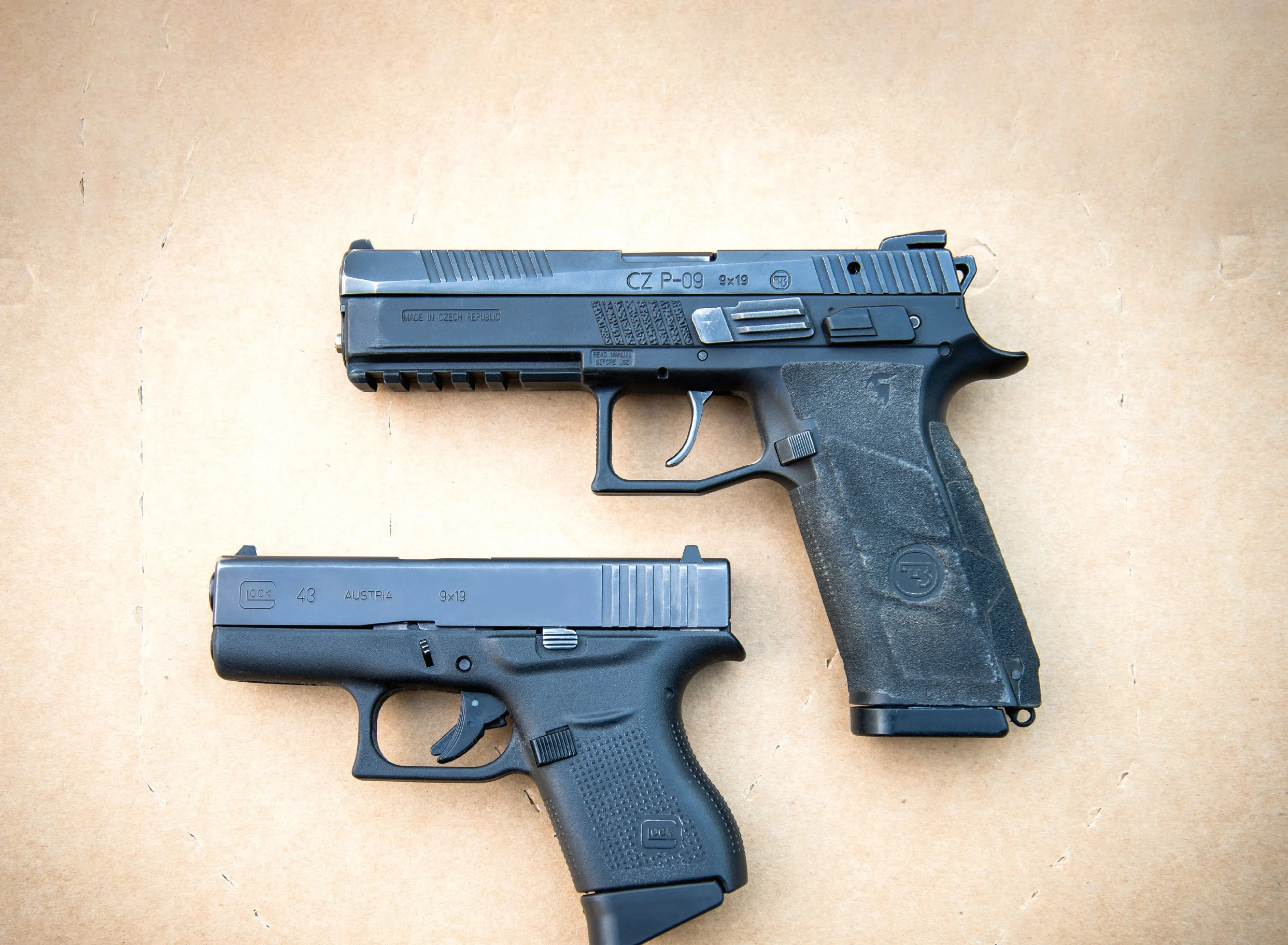
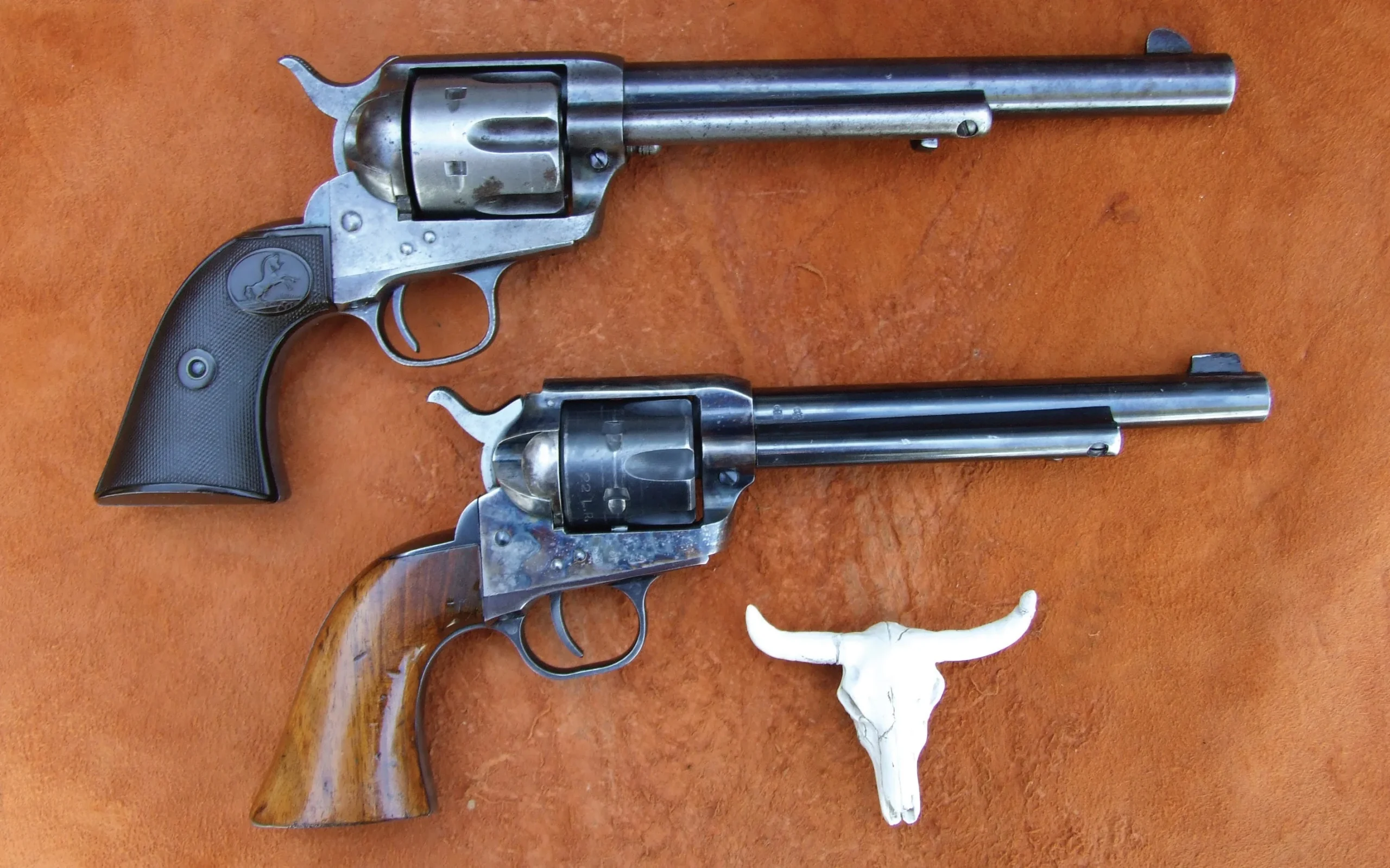
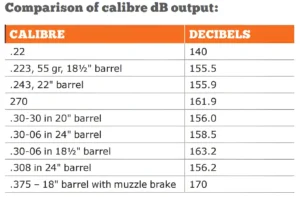
The average unsuppressed gunshot ranges from 140dB to 165dB, depending on the make, model, calibre, barrel length and type of ammunition used. The mechanism that causes the sound of the gunshot is the muzzle blast which occurs when high-pressure gases within the barrel are suddenly released and rapidly expand when the projectile exits the muzzle. A typical muzzle blast generates a shock wave of louder than 140dB.
WHAT INFLUENCES THE LOUDNESS OF A GUNSHOT?
Various aspects influence the loudness of a gunshot. Some of these are the area where the gunfire takes place; the position and proximity to the firearm; the load intensity of the ammunition and type of propellant that is used; and the environmental temperature.
A shorter barrel length typically causes a louder gunshot. For more powerful calibres, the higher the volume of gas escaping the muzzle, coupled with the velocity at which it escapes, the higher the volume of the gunshot. And, a muzzle brake can add up to around 10dB to the sound level.
Silencers can suppress firearm noise by an average of around 30dB but it is still not acceptable to use a silencer without hearing protection.
Although historically, there are some reports of firearms with an output of over 200dB, today the .460 Weatherby Magnum with an 18″ barrel and a muzzle brake is most likely the loudest firearm you will get with an output around 170–180 decibels.
Exposure to noise greater than 140dB can permanently damage hearing in less than one second – and almost all firearms create noise that is over the 140dB level. In areas with reverberation where sound can bounce off walls, floors and ceilings, sound will be louder and thus increase the risk of hearing loss.
People who do not wear hearing protection while shooting can suffer severe hearing loss with as little as one shot, if the conditions are right. Audiologists see this especially during hunting season when hunters and bystanders are exposed to rapid fire from rifles, shotguns, or pistols. In most cases, an immediate severe hearing loss will not necessarily happen, but some damage will most definitely occur.
People who use firearms are more likely to develop hearing loss and tend to have high-frequency permanent hearing loss, which means that they may have trouble hearing speech sounds like “s”, “th” or “v” and other high-pitched sounds. Interestingly, the opposite ear to the firearm often suffers more damage because it is closer to, and directly in line with, the muzzle of the firearm. The position of the ‘shooting ear’ undoubtedly protects the ear due to the head shadow.
Noise-induced hearing loss is not immediately noticeable and presents itself in a number of ways. People with this sort of hearing loss typically say that they can hear what is being said but that it is not clear – that people are mumbling. They may mishear and ask for a repeat of what is being said.
They may have ringing in their ears, called tinnitus. The ringing, like the hearing loss, can be permanent. They may have difficulty hearing ladies’ voices (male voices are clearer) and might struggle to follow a conversation in a big group of people or in a situation with a lot of background noise. Their TV or radio might be slightly louder than what others prefer the volume to be.
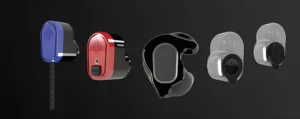
A variety of custom design options are available from Noise Clipper.
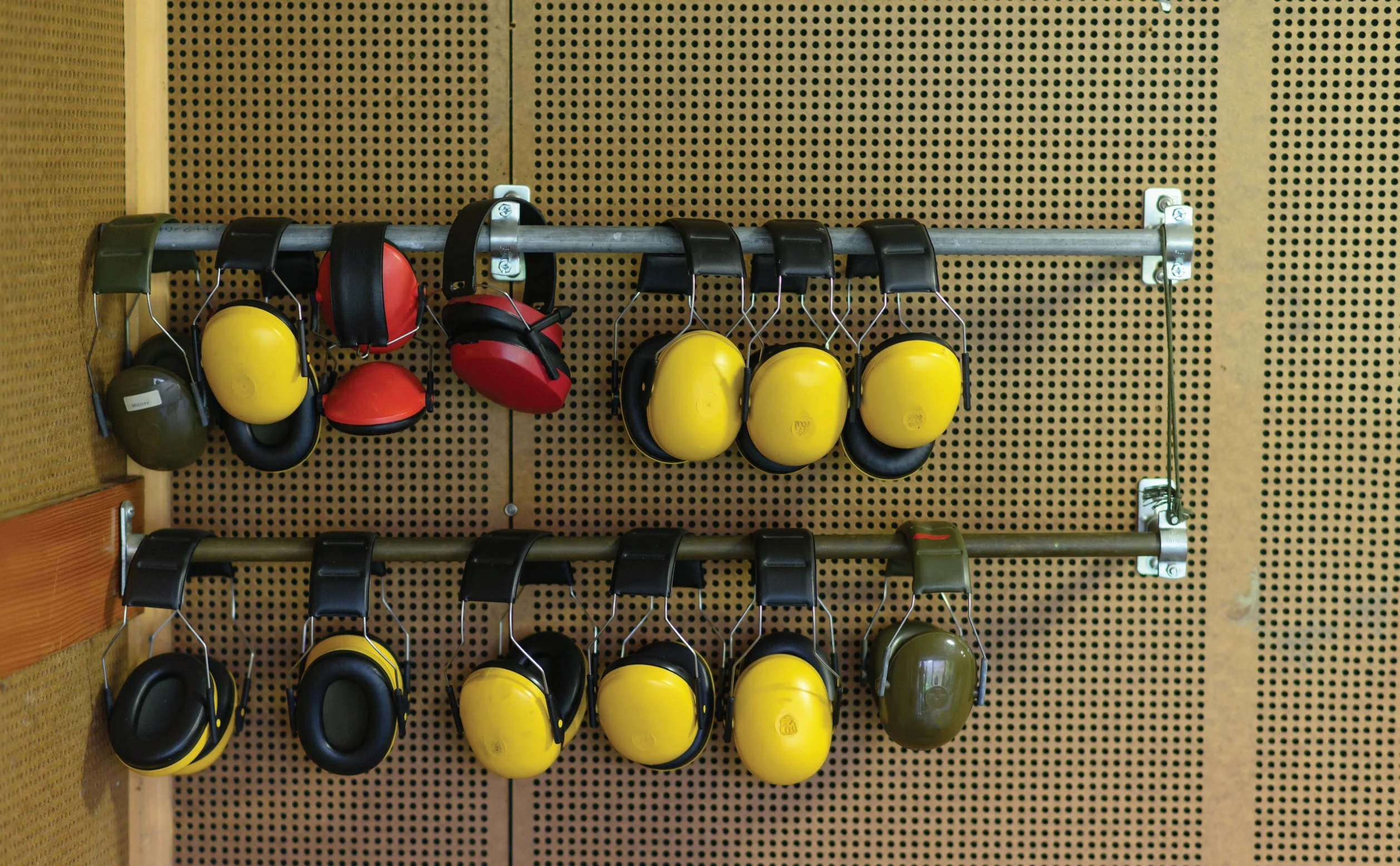
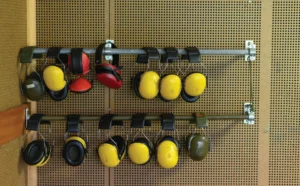
While hearing damage is not reversible, it is never too late to start using protection to prevent further damage. Hearing can be shielded from firearm noise with appropriate protection such as earplugs or earmuffs. Unfortunately not enough firearm users wear hearing protection when target shooting and hunters are even less likely to use hearing protection due to their need to be fully aware of their surroundings. Fortunately some devices now allow hunters to hear their surrounds and communicate, but filters out dangerous noise levels. Hearing protection should be worn on open shooting ranges, when in the outdoors, and on indoor shooting ranges.
Hearing protective devices are available in two main types, commonly referred to as ‘active’ (electronic) and ‘passive’ (nonlinear) devices. Active hearing protection amplifies soft sounds for increased environmental awareness, but closes up whenever a loud sound is present. These electronic sets are available in earmuffs, custom in the ear, and universal in the ear designs.
Passive (nonlinear) hearing protective devices typically allow certain sounds to pass through but with the use of filters, filter out some sounds. These sets are available in custom in the ear, and universal in the ear designs.
Untreated hearing loss has been associated with many conditions that could have been prevented. Hearing loss isn’t just an ear issue; it’s a quality of life and health issue. Untreated hearing loss can have serious consequences and is associated with diminished cognitive function, poorer mental health, and social withdrawal.
If you suffer from hearing loss, it should be treated. A consultation with an audiologist to thoroughly assess your hearing and for advice on appropriate hearing protection for your needs, is advised.
For more information contact Yolandé van der Westhuizen on 012-653-3830 or www.yvdwaudiology.co.za